

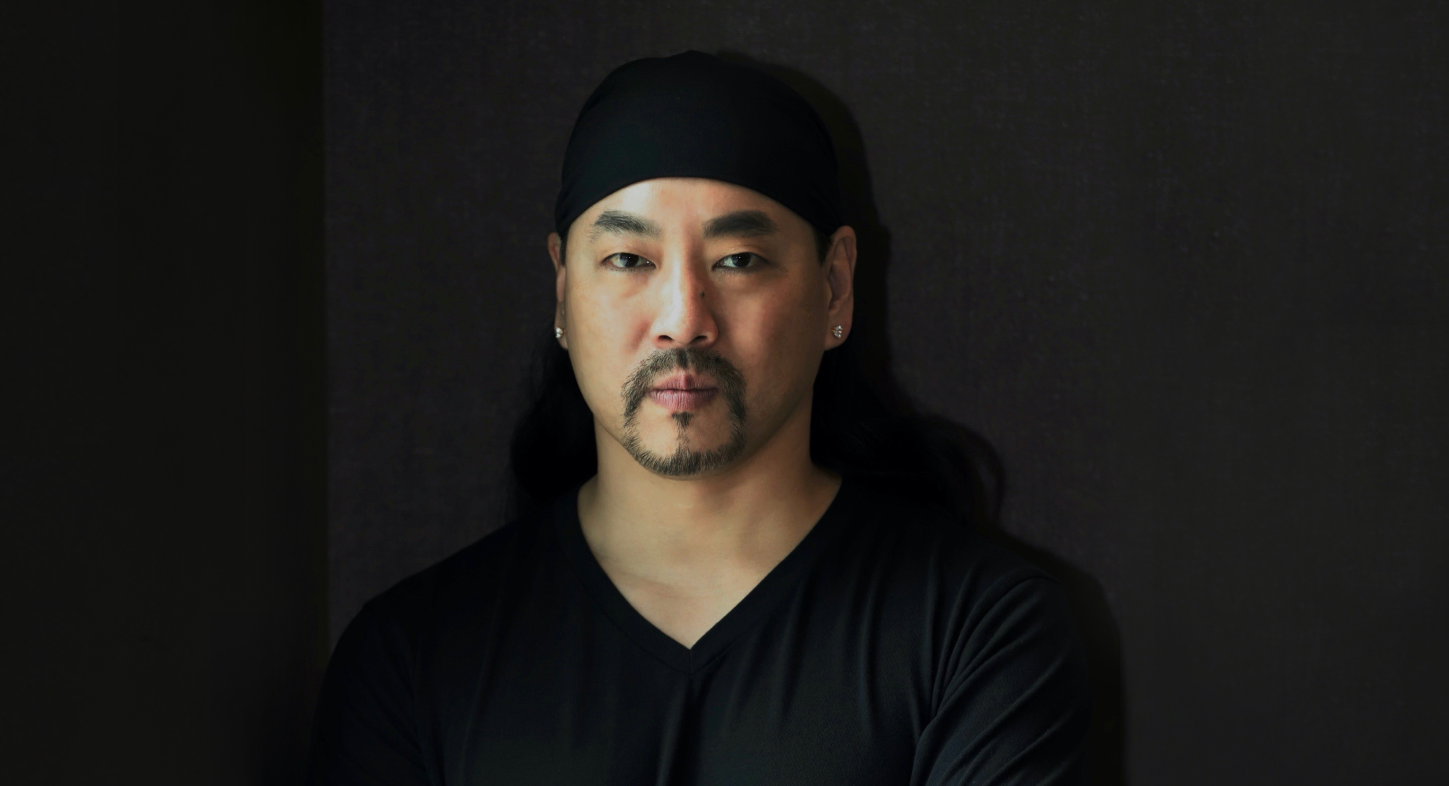
Functional music is often misunderstood as background sound. For Feed Originals composer Taku Hirano, it is anything but passive.
With more than 300 science-informed tracks composed under the name Akai Masa, and a new full-length release as Taku Hirano, he approaches ambient music with both research and rigor.
He was recently honored with the 2026 Berklee Alumni Achievement Award for his boundless career as a performer, percussionist, professor, and product collaborator.
We spoke with him about culture, frequency, and the structure behind intentional listening.
How does your background in global percussion traditions influence your ambient compositions?
“My study of percussion traditions from around the world has always been about more than rhythms. It comes down to a reverence for culture and heritage, building bridges between past and present, and experiencing different sonic textures and feels.”
What distinguishes intentional functional music from generic background ambient music?
“The main difference is in the listener through focus and aim. Listening becomes a practice in which the music is used as a tool for purpose, whether that be for relaxation, meditation, focus, energy, study, or sleep. My goal is to compose music that can help facilitate mindfulness and intent.”
How did your graduate research shape your compositional decisions?
“My research encompassed the history, musicology, science in the study of data gathered on the effects of sound frequency therapy on the enhancement of cognitive function, and the market viability of functional music as a therapeutic tool for wellness. This directly informed the compositional choices that I made while creating tracks.”
“Knowing about the history and musicology helped me with instrument choices like the use of singing bowls, while research of data in published studies helps inform everything from tempo choice to frequencies used, for example 432 Hz.”
Can you share specific musical elements you consider when writing for relaxation or focus?
“432 Hz has been documented as serving as a sonic therapeutic wellness tool to reduce stress, lower heart rates, and ease anxiety. I have used a hand pan or crystal bowls tuned to this frequency to build simple, non-obtrusive pentatonic melodies and sound beds, resulting in tracks for relaxation and sleep.”
How do you balance science-backed parameters with artistic intuition?
“When I first begin to compose a piece, I start with an intent, for example to create a track for relaxation. Science may first help me in my choices in terms of tempo, frequency, rhythm and key. I use that as a jumping off point, and then let my imagination take me to my vast palette of sounds to add layers to my artistic creation.”
How has contributing to Feed Originals shaped your career?
“Composing for Feed Originals has been a great enhancement not only to my touring, but also my teaching. It provides me with a great creative outlet at a more introspective and steady pace that balances out the high energy of traveling and performing live, and the cerebral nature of teaching the inner workings of the music business.”
He adds, “I am definitely a beneficiary of the music that I compose for relaxation and focus. The process of creating it both grounds me and forces me to be very intentional with my creative choices.”
What does sustainability look like for a modern musician?
“As a modern working musician, diversity is key. Creatives are cultivating portfolio careers where multiple interests are fostered and ultimately monetized. It comes down to intention, follow-through, and balance.”
For Taku Hirano, functional music begins with intent. Even when rhythm is subtle or nearly absent, that sensibility shapes tone, pacing, and texture. Tempo, key, and harmonic simplicity also play a role and his research influences everything from instrumentation to structure. Research sets the framework. Art fills the space.
For Feed Originals, functional music is not just a genre. It is a growing intersection of artistry, wellness, and technology, built for real-world outcomes and sustained listening.

 2 min
2 min