

After nearly twenty years in Los Angeles, I’m moving back to Connecticut, where I grew up. The shift has quietly forced me to reexamine a few assumptions about culture, about taste, and about how music actually finds people. One of the first moments that cracked this open came in an Uber ride home from the airport.
I slid into the back seat already confident I knew what I’d hear, based on the driver’s age, posture, and general vibe. Instead, country music came through the speakers. Not novelty, not nostalgia, but something contemporary and melodic. When I asked about it, he told me he was listening to Pandora. A decade earlier, he said, he’d been almost exclusively a hip-hop fan. But as country music began pulling more openly from hip-hop, R&B, soul, and rock. Without intending to, he found himself inside country music’s orbit.
That conversation lingered in my mind because it illustrated something larger: diversification within country music hasn’t just changed the sound, it’s reshaped who feels invited to listen. Country music today isn’t merely more popular; it’s broader in definition. The audience is wider, the creative pool deeper, and the borders far more flexible than they once were.
One of the lanes quietly enabling that expansion is often called Cosmic Country, a strain of country music that leans psychedelic, reflective, and open-ended. The twang is still there, but it’s refracted through atmospheric guitars and lyrics that suggest more than they declare. The result feels familiar without being confining, welcoming listeners who may never have identified as country fans at all.
The roots of this approach stretch back to the late 60s and 70s, when artists were actively resisting rigid genre labels. Gram Parsons famously rejected the term “country rock,” preferring Cosmic American Music to describe his fusion of country, soul, gospel, blues, and folk. Around the same time, The Grateful Dead, with Bob Weir, stretched American roots music through improvisation and psychedelia. Buffalo Springfield and Crazy Horse blurred folk, rock, and country into something restless and uncontained. Early Eagles releases leaned heavily on harmony and narrative without sacrificing scale.
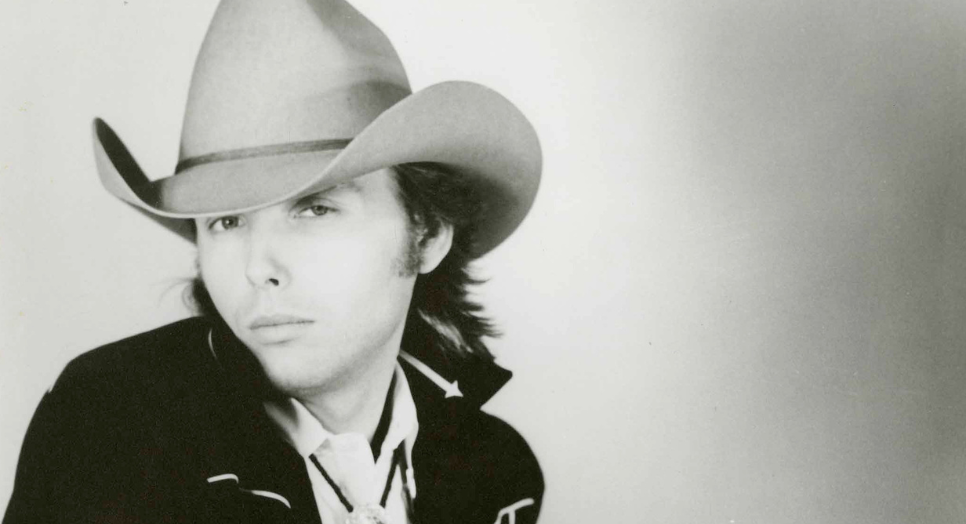
Cosmic Country has always favored songs that breathe. You hear it in the Bakersfield snap of Dwight Yoakam, the drifting, literary sprawl of Wilco, and the sun-warmed melodic ease of America. More recently, Tyler Childers channels Appalachian storytelling with a sense of cosmic scale, while Kurt Vile brings a loose, guitar-forward drift that feels spiritually aligned.
Adjacent movements helped shape the texture as well. The smooth grooves, studio clarity, and emotional restraint later associated with yacht rock expanded the emotional range of roots music. Artists like Van Morrison and Electric Light Orchestra proved that introspection and ambition didn’t have to cancel each other out.
In the present, Daniel Donato has emerged as the style’s most visible modern advocate, using Cosmic Country, to describe both his sound and his band. After years of busking on Nashville’s Lower Broadway and logging hundreds of gigs at Roberts Western World, Donato absorbed outlaw country, classic rock, and jam-band improvisation firsthand. His framing treats songs as living things shaped by energy, improvisation, and the room itself. Positioning Cosmic Country as communal and active rather than archival.

Teddy Swims c/o WMG
On the mainstream edge, Teddy Swims brings soul-deep vulnerability that sits comfortably alongside country textures, while Benson Boone leans pop while carrying the same earnest melodic weight. Even radio-leaning acts like Bailey Zimmerman reflect how emotional directness and genre flexibility now coexist without friction.
From a Feed.fm curation standpoint, Cosmic Country fills a specific and increasingly important role. Emotionally grounded and reflective, it works especially well in stretch, recovery, mobility, and low-impact fitness environments—spaces where music supports presence and flow rather than driving intensity. Its flexibility also allows it to blend seamlessly with classic rock, yacht rock, Americana, jam bands, and select pop, enabling longer, more cohesive listening experiences.
Coming back to Connecticut has reminded me that music doesn’t live in scenes—it lives in people. In Los Angeles, genres often feel tethered to industries or neighborhoods. Here, music shows up in everyday spaces, carried by listeners who arrived through discovery rather than identity. That Uber driver wasn’t an exception; he was the signal. Cosmic Country isn’t a trend. It’s what happens when country music opens itself wide enough to let more people in.

Dwight Yoakam cover image courtesy of Warner Music Group
 3 min
3 min