

.svg)
The fitness industry has lurched forward, pulled back, and transformed in ways no one expected, shaped by technology breakthroughs, cultural shifts, and a global pandemic. We've been watching evolution of digital fitness since the early days, when fitness apps meant step counters and basic workout timers. Now we're looking at an industry built on AI coaches, connected wearables, and platforms that blur the line between fitness and healthcare. Here's how we got here.
2015–2018: Early Experiments
Go back in time with our 2018 guide: "Your Guide to Fitness Tech and Music"
What we said then: In 2018, Feed.fm CEO Jeff Yasuda put it simply: "With the myriad of fitness apps out there, sometimes it is difficult to find the right one for you."
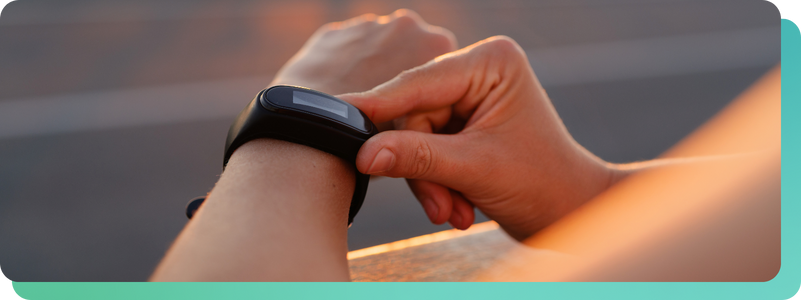
Fitness tracking dominated. Fitbit on your wrist, MyFitnessPal on your phone, Strava for the serious runners. Then the workout apps started flooding in. Yoga apps, running apps, HIIT apps. Thousands of options for every possible interest and fitness level.
The tech was advancing. Wearables delivered real-time heart rate monitoring and movement tracking that actually worked. Body-weight exercises took off, which meant you didn't need a gym membership to get results. Working out with your phone went from weird to normal.
But apps were still quick check-ins, not daily habits. And fitness is personal. What works for one person doesn't work for another. Companies found themselves in a crowded market, all trying to figure out how to stand out when everyone suddenly had an app.
On music: Streaming had officially won in 2015. 77% of 12-24 year olds were listening to online radio each month. The music industry came around: "The reality is that the consumer has spoken and this is what fans want,” Recording Industry Association of America (RIAA). But the debate raged over algorithms versus human curation. Apple and Spotify both recognized that machine learning had limitations. As we noted then, "machine learning lacks situational context, as well as the distinctly human variable of taste." The winning approach? Music experts using data as a tool.

2019: Specialization Era
Read our 2019 analysis: "The Fitness App Ecosystem: Specializing in Specialization"
What we said then: "Specialization is the name of the game... The more specific the value proposition an app can offer, the more time and money the eventual 'power users' will spend."
The evolution of digital fitness saw the app ecosystem explode to nearly 320,000 health and fitness apps. Aaptiv pioneered audio-only workouts with 200,000+ members. Mirror, Tonal, and Peloton started bundling apps with connected equipment. Apps like Future were reimagining personal training by pairing users with elite coaches who'd trained Olympians and NBA players. The data showed fierce loyalty: 96% of paid subscribers used just one fitness app.
The winning strategy was clear: go deep on one thing. Be the best at audio workouts, or cycling, or yoga, or strength training. Apps that tried to be everything to everyone got lost in the noise. Users wanted precision, not generalization.
On music: Apps started figuring out that music was the difference between a user finishing a workout or quitting halfway through. The smart ones integrated curated, pre-cleared music libraries with tempo-matched stations instead of forcing users to manage their own. Data showed that professionally curated music, organized by workout type and intensity, significantly improved completion rates.
2020: The COVID Catalyst
Read our blog post: “How 3 Months of Lockdown Changed Our Approach to Working Out”
What we said then: "Despite the media telling you otherwise, it seems people have actually improved their fitness throughout this stressful time."
Lockdowns hit. Gyms closed overnight. Peloton wait times stretched to 10 weeks. Digital fitness adoption went from gradual to explosive in a matter of days. If you could put a screen on it and livestream a class through it, someone was building it and VCs were funding it. Virtual classes went from experimental to essential. The data surprised everyone: 70% of people said they were working out more than ever before. Not less. More. Feed.fm saw massive usage spikes across all at-home fitness app customers throughout April and May. Workout frequency went up. So did workout duration.
Home workouts came with unexpected challenges. 71% of people had others present in the room while they exercised (kids, spouses, roommates) and 18% found it embarrassing. The living room became the gym for 43% of exercisers. But people made it work: 47% used equipment they already had on hand. The ones who bought new equipment? Weights and yoga mats, when they could find them in stock.
The assumption took hold: this is the new normal. Gyms are over, digital is the future, and growth will continue forever. A lot of money got spent on that assumption, and it was a key moment in evolution of digital fitnessevolution of digital fitness.
On music: 83% of people said music makes or breaks a workout. 51% said they couldn't live without their workout music. With everyone working out at home, audio quality and music curation became critical differentiators. Apps with legally licensed music libraries curated for specific workout types saw significantly better engagement and retention. The data was clear: users who worked out with integrated music spent more time in apps and returned more consistently.
2021: Peak Digital Fitness
Read our blog post: “Feed.fm Announces New Data, Pointing Toward Hybrid Model of Fitness”
What we said then: "More people are taking advantage of technology, tools, and housemates to get the most out of their home routines. With fitness companies like MIRROR and FitOn launching music-based community features like "Workout Party" and "Face-Off", people are finding new ways to connect online for workouts and creating virtual fitness communities."
The boom continued to define the evolution of digital fitness. Fourteen months into the pandemic, the numbers told the story: Feed.fm streams on partner apps increased 789%. By the end of 2021, 60% of top Health & Fitness apps had added video workouts. Investment poured in. Valuations soared. Every platform expanded. more modalities, more instructors, more content. The behavioral shifts were striking. 70% of respondents were still working out more than before, and workouts lasted longer. But the home workout evolved: 57% now had a partner in their home fitness routine, up from 41% the year before. 35% appreciated having someone there to cheer them on. The living room gym became social.
Equipment and technology adoption exploded. 85% of people purchased home exercise equipment in the past year, up from 52% in 2020. 89% were using apps and devices in their home workouts, up from 57%. People found ways to connect online for workouts. Convenience remained king: 43% cited it as the most enjoyable part of working out at home.
Users were building home gyms, buying connected equipment, subscribing to multiple apps. The question everyone asked: why would anyone go back to a gym when they could get this experience at home? The market gave its answer: because they could. And in 2022, they would.
On music: The numbers jumped significantly. 93% of people said music makes or breaks the workout, up from 83% in 2020. Music became non-negotiable. The apps that understood this invested heavily in curated libraries, pre-cleared licensing, and tempo-matched programming. Professional music curation was the difference between users finishing workouts or quitting halfway through.
2022: Flexibility & Options
Read our 2022 update: "The Fitness App Ecosystem: Flexibility & Options"
What we said then: "People want flexibility and options, to be met where they are in their wellness journeys and increasingly porous work-life schedules."
The market hit $1.1 billion, with projections to reach $4.7 billion by 2030. 30% of U.S. smartphone owners were using fitness apps monthly. Consumer spending was up 20%. But the story had shifted from specialization to flexibility. Users wanted live and on-demand. Home and gym. Video and audio. Multiple modalities in one place.
Even the category leaders started broadening. Peloton added strength training and yoga. Tonal added cardio content. Apps like Sworkit Health expanded from workout guidance into holistic wellness coaching. The challenge became offering options without diluting your value proposition. How do you give people everything they want while still standing for something specific?
On music: Personalization became key: curating diverse stations so users could choose genre, tempo, and energy level that matched their workout. Apps that offered well-organized music libraries with clear categorization by workout type saw music evolve from feature to retention driver.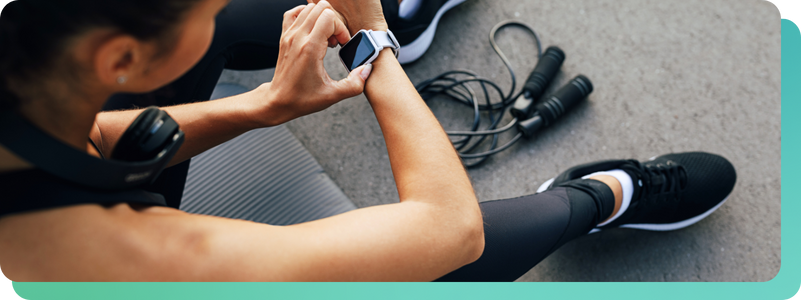
2023: Recalibrating the Fitness Market
Read our 2023 update: "Workout music 2023: Feed.fm year in review"
What we said then: “People are turning to music to help them sleep, focus, meditate, and relax. Streaming music providers are investing in wellness channels, artists are experimenting with music based on science-backed parameters, and we are commissioning and programming more functional music.”
Gyms fully reopened. Users had options again, and digital fitness faced its first real retention test. The flexibility that defined 2022 became standard. Live and on-demand, home and gym, multiple workout types. Users expected all of it. But baseline offerings weren't enough anymore. Apps needed reasons for users to stay. Music was one of those reasons.
Apps started understanding music as infrastructure for experience, not just accompaniment. The ones that invested in professional curation, science-backed programming, and emotional connection saw users return. The ones that treated music as an afterthought lost users to competitors who didn't.
On music: As users split time between home, gym, and outdoors, apps needed music strategies that traveled with them. Pop stayed dominant but got faster and EDM influence pushed tracks up 5 BPM, matching the higher-intensity workouts post-pandemic users craved. Collaborations (David Guetta and Bebe Rexha) brought cross-genre energy. The retention secret: nostalgia. Throwback hits, classic rock, Hip-hop's 50th anniversary, 3x growth in Latin stations, familiar music created emotional connection that brought users back workout after workout. New tracks got attention. Old favorites built loyalty. 
2024: The Expectation Shift
Read our 2024 analysis: "2024 Wellness & Workout Music Report"
What we said then: "In 2024, music proved itself as a vital ingredient for digital fitness and wellness success—fueling motivation, enhancing recovery, and unlocking performance potential."
As the evolution of digital fitness went on, the market hit $10.6 billion. More than double what anyone predicted for 2030 just three years earlier. But the explosive growth phase ended. Apps faced a new reality: prove you're essential, or watch users leave.
In twelve months, AI went from competitive advantage to baseline expectation. The platforms that won weren't the ones with the most AI features. They were the ones who made AI invisible infrastructure that improved the experience.
Another shift was convergence. Fitness apps merged with healthcare through prescription tracking and telehealth integration. Traditional gym chains like Equinox, Life Time, and Orangetheory finally got their digital companions right. Wearables stopped being accessories and became requirements. Apple Watch, Whoop, Oura Ring. Users expected their sleep scores, HRV data, and recovery metrics to automatically inform their next workout.
Everything connected to everything. The question changed from "which app?" to "which platform ties it all together?" Apps without premium music lost users to competitors who had it. The winners built ecosystems, not features.
On music: 94% of users said music was crucial for motivation. Apps with professionally curated, legally licensed libraries kept users longer. Rock climbed back to the number two genre. Pop stayed on top, dominated by Coi Leray, Dua Lipa, and Miley Cyrus. Cultural moments like Charli xcx's "brat" summer and Taylor Swift's Eras Tour showed up in workout soundtracks. 
2025: The Intelligence Era
Read our current analysis: "The 2026 digital fitness ecosystem"
By 2024, the market reached $10.6 billion. More than double the 2030 projections from three years ago. AI stopped being a cool experiment and became a must-have. Look at Fitbit's Gemini AI Coach, Urunn's AI running companion, or Apple's Workout Buddy. AI has quickly turned from an innovation to an expected feature.
The real shift we're seeing in the evolution of digital fitness is integration. Fitness merged with healthcare: prescription tracking, telehealth integration, biomarker-based recommendations. Mental health and recovery aren't separate categories. They're core features. Wearables graduated from activity trackers to health monitoring systems with ECG, blood pressure, and continuous recovery metrics.
The apps winning right now understand your complete health picture and adapt in real-time. They're hubs, not tools. Echelon’s generative AI powered fitness platform adapts workouts across treadmills, bikes, rowers, and strength platforms, creating tailored training regimens that work at home and in commercial gyms. Hydrow's Hydrometrics uses AI to analyze your rowing form and performance in real-time, providing instant feedback to improve technique. Aaptiv has embedded adaptive AI throughout its entire experience, from workout selection to progression planning to recovery recommendations. Whether it's Barry's X bringing the boutique studio energy to your home with the right music and vibes to keep you engaged, or platforms like Alo Wellness Club building complete wellness ecosystems, the winners are the ones who've figured out that users don't want isolated features. They want intelligent systems that know them.
On music: Data-driven curation reached new sophistication, but music remains what it's always been: expertly curated to turn obligation into experience, with data showing exactly which combinations of tempo, genre, and energy drive the best outcomes.

Want the full picture?
Our complete 2026 Digital Fitness Ecosystem Report breaks down the evolution of digital fitness, expands on all four pillars, shows you where the opportunities are, and gives you an infrastructure playbook that actually scales.

 3 min
3 min